Dealership Missed-Call Recovery: Turn Voicemail Into Booked Appointments
A practical framework for recovering dealership voicemail, abandoned calls, overflow, and after-hours demand before customer intent goes cold.
ScaleVoice
June 18, 2026 · 8 min read
Direct answer
Dealership missed-call recovery is a fast callback or overflow workflow that reaches customers who hit voicemail, abandoned a call, called after hours, or reached a busy lane, then moves them toward a booking, transfer, or clean summary before the intent cools.
Direct answer
Missed-call recovery matters because a customer who already called the dealership is still a high-intent customer. The best recovery workflows call back quickly, explain the reason for the call, capture the need, and move the customer toward a confirmed next step.
A missed call is not a dead lead
Dealership teams often treat missed calls as a staffing problem. It is more useful to treat them as an execution problem. The customer has raised a hand, but the store still needs a reliable way to turn the signal into a booking, transfer, or summary.
The recovery path should be specific. A generic message-taking workflow is not enough for service demand, sales intent, recall questions, or urgent customer concerns. The system needs to know which action it is trying to create.
The recovery loop
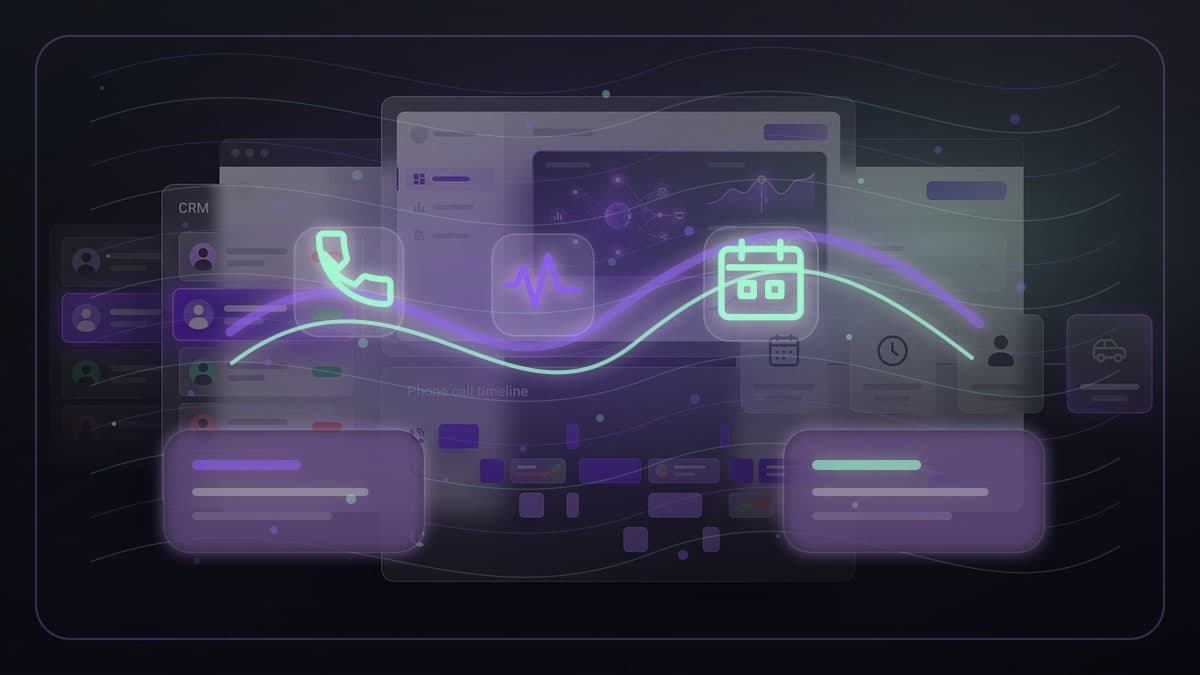
A strong loop has five parts: call source, fast outreach, qualification, next-step ownership, and writeback. If any part is missing, the dealership has created another place to check instead of recovering demand.
For service, the next step may be a booked appointment or advisor transfer. For sales, it may be a test drive or qualified handoff. For after-hours demand, it may be a next-day appointment path with clear escalation for urgent cases.
Where to start
Start with the missed-call queue that has the clearest value and the least ambiguity. For many dealerships, that is service-line overflow or after-hours service calls. The business already knows the intended outcome: help the customer get to the right appointment path.
Once the first queue is reliable, expand to abandoned calls, voicemail, web-form callbacks, recall lists, or service reminders. The expansion should follow proof, not excitement.
Measurement model
Measure recovered calls, reached customers, appointments booked, transfers completed, transfer reasons, and duplicate-work avoided. These are better proof points than raw call volume because they show whether the customer moment became useful work.
Buyer checklist
Before buying missed-call AI, ask where the call starts, how fast it calls back, what the assistant can book, how it transfers, which system receives the result, and how managers review the failed or escalated calls.
Next step
Turn this workflow into a scoped demo.
Bring the call source, booking rules, system destination, and exception path. ScaleVoice will map the first workflow that can produce a measurable booked outcome.
Recover missed callsFAQ
Questions buyers ask before scoping the workflow
How quickly should missed dealership calls be called back?
Fast enough that the customer's intent is still live. The exact timing should follow store hours, call type, urgency, consent posture, and escalation rules.
Can missed-call recovery handle sales and service?
Yes, but the first pilot should start with the call type where the next step and measurement are clearest.
What if the customer wants a human?
The workflow should transfer or summarize the exception according to approved rules. Human handoff should be designed into the product.
What should the dealership measure?
Measure calls recovered, appointments booked, transfer quality, exception reasons, and whether the result reached the right system or team.